Deepfake technology is reshaping marketing, allowing brands to create ultra-realistic content using AI content generator tools by mimicking faces, voices, and expressions. While it offers cost savings and personalization, it raises ethical concerns around trust, consent, and manipulation. Here's what you need to knows:
- Benefits: Lower production costs (starting at $1,100), multilingual campaigns, and personalized ads at scale. For example, Zalando used deepfakes to create 290,000 tailored ads without extra shoots.
- Risks: Consumer trust issues, legal challenges (e.g., FTC fines up to $43,792 per violation), and potential misuse for scams or fraud.
- Ethical Concerns: Public unease is growing, with 84% of Americans worried about deepfake misuse in 2024. Issues like "digital resurrection" of deceased figures add complexity.
- Solutions: Transparency is key - clearly disclose AI use, secure consent for likenesses, and implement ethical guidelines to avoid deception.
Deepfakes can enhance storytelling but must be used responsibly to avoid damaging trust. Brands need to balance innovation with ethics to navigate this evolving landscape.
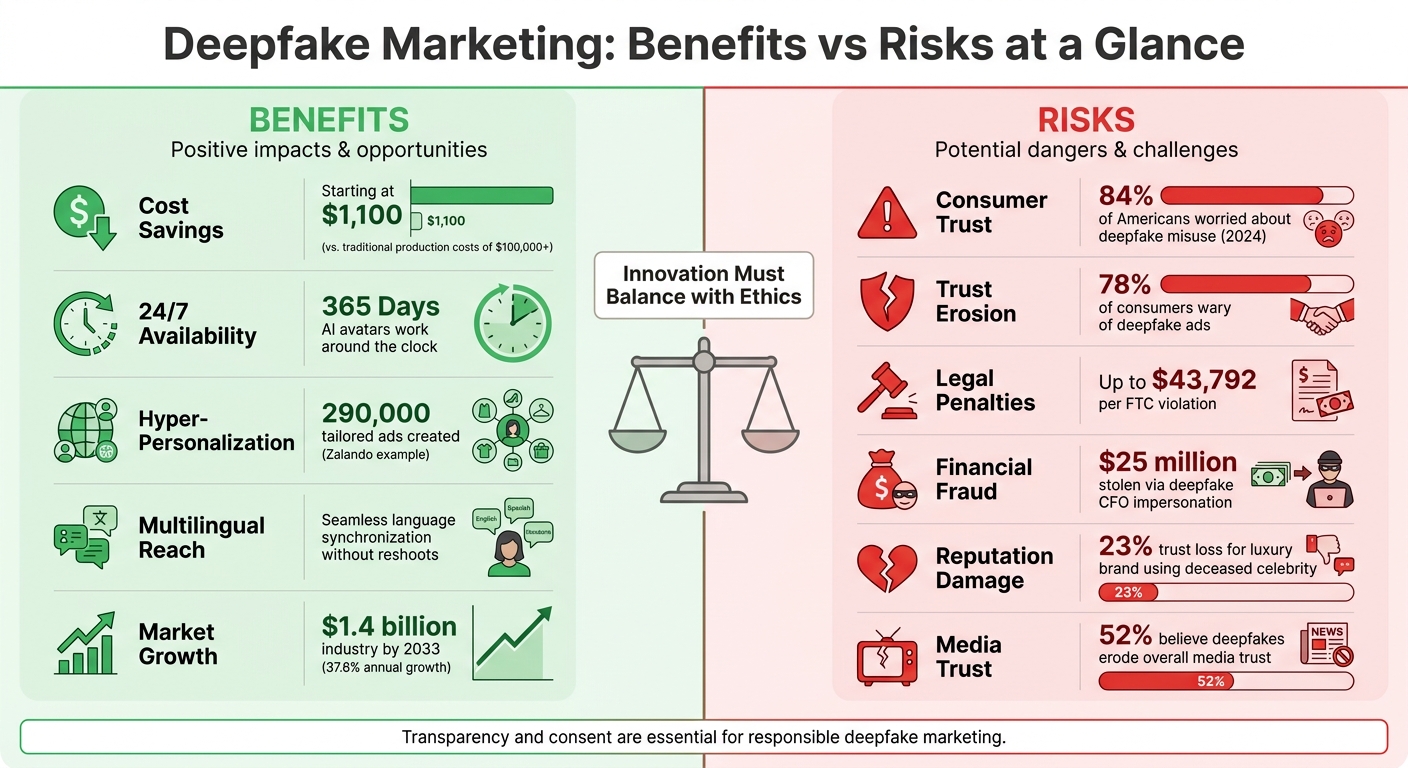
Deepfake Marketing: Benefits vs Risks Comparison
Deepfakes & AI Ethics | Cyber Made Human Podcast
sbb-itb-a759a2a
1. Marketing Uses
Deepfake technology is changing the game for how brands create and share content. From cutting costs to delivering highly personalized experiences, these advancements are shaking up marketing strategies in ways that were unimaginable not long ago. Not only does this technology streamline production, but it also offers businesses a chance to save big.
Business Benefits
One of the clearest advantages of deepfakes in marketing is the ability to drastically reduce production expenses. For instance, producing a deepfake marketing video starts at around $1,100. Compare that to traditional methods - using celebrity talent, booking travel, and renting studio space - which can run into tens or even hundreds of thousands of dollars. A prime example of this shift is happening on Taobao, China's largest e-commerce platform, where AI-generated influencers promote products around the clock. This eliminates the hefty costs associated with hiring human influencers.
Deepfakes also excel at hyper-personalization on a massive scale. Brands can now create thousands of customized video versions tailored to individual consumers. Imagine a spokesperson addressing you by name or speaking directly in your native language - these are no longer far-fetched ideas. Lay's took this concept to heart by using deepfake AI to bring back the voice and expressions of the late football coach Sir Bobby Robson. In a moving campaign, they delivered a heartfelt message to fans, showcasing how deepfakes can evoke powerful emotions. This kind of nostalgic storytelling simply wouldn’t be feasible through traditional methods.
| Feature | Traditional Methods | Deepfake Technology |
|---|---|---|
| Production Cost | High (talent fees, travel, studio, crew) | Low ($1,100+ for initial creation) |
| Availability | Limited by human schedules | 24/7 continuous operation |
| Language Reach | Requires multiple takes or dubbing | Seamless multilingual synchronization |
| Personalization | Segmented/Generic | Hyper-personalized (individualized) |
The advantages don’t stop there. Deepfake technology makes localization a breeze. By tweaking voice, language, and facial expressions, brands can adapt a single piece of content for audiences across the globe - all without needing to reshoot. This not only speeds up production but also slashes time-to-market compared to traditional methods, which often require separate filming and post-production for every market. While the efficiency and scalability are undeniable, these advancements also spark critical ethical discussions that demand attention.
2. Ethical Problems and Risks
As deepfakes find their way into marketing strategies, they bring along a host of ethical and legal challenges. While this technology offers new opportunities, it also raises serious concerns about trust and accountability that marketers cannot afford to ignore.
Ethical Implications
The public is clearly uneasy about the rise of deepfakes. In 2024, 84% of Americans reported being concerned about their use, with 68% saying their worry had increased compared to the previous year. Even more telling, 52% believed deepfakes could erode trust in media altogether. Paul Chaney, Editor of AI Marketing Ethics Digest, summed up the sentiment:
"Consumers are increasingly concerned... as they no longer trust that their senses and experiences are enough to determine whether what they're seeing or hearing is real or fake."
One particularly thorny issue is digital resurrection - using AI to recreate deceased public figures. This raises questions about who owns a person’s likeness after death: the brand, the AI developer, or the individual’s estate? Without clear legal boundaries, marketers risk stepping into murky territory when handling legacy rights and permissions.
Another ethical concern is the shift in how audiences perceive marketing. Traditional advertising relies on persuasion, but deepfakes blur the line into manipulation. If consumers can’t trust what they see or hear, the entire foundation of brand communication is at stake. Laura J Bal from Marketing Rewired highlights this challenge:
"The deepfake risk isn't just in deception - it's in perceived deception. Even if a deepfake campaign is done with good intent, audiences may still feel uneasy."
These ethical concerns are now drawing intense legal scrutiny as regulators look to address the misuse of this technology.
Legal Considerations
The legal framework surrounding deepfakes is evolving quickly. In August 2024, the FTC introduced the Consumer Review Rule, which bans businesses from creating or using AI-generated reviews from individuals who haven’t actually used the product. This is part of a broader effort to clamp down on deceptive AI practices.
Marketers also need to navigate Right of Publicity laws, which vary by state but generally prevent the commercial use of someone’s name, voice, or likeness without consent. In many states, these rights extend to a person’s estate for years after their death. Additionally, Section 5 of the FTC Act targets “unfair or deceptive acts or practices,” giving regulators the authority to crack down on misleading deepfake campaigns.
The DEEP FAKES Accountability Act adds another layer of regulation, focusing on the creation and distribution of deepfakes without proper consent or labeling. With 57% of consumers worried about AI-driven scams and 33% either personally experiencing or knowing someone who has fallen victim to a deepfake scam, lawmakers are under pressure to tighten these rules even further.
Mitigation Strategies
To address these risks, brands are taking proactive steps. One of the most important measures is mandatory disclosure - clearly informing audiences when AI-generated faces or voices are used in marketing. As Laura J Bal advises:
"If you're using AI-generated faces or voices, disclose it. Trust will erode fast if consumers feel duped."
Beyond transparency, companies are developing internal ethical guidelines for generative AI. These include codes of conduct and protocols to assess the emotional impact of campaigns before they go live. The aim is to use deepfakes responsibly, such as for language translation or improving accessibility, rather than for deception.
Securing documented consent is another key step, especially when using celebrity likenesses or resurrecting historical figures. This includes obtaining permissions from estates. Brands are also investing in AI-powered detection tools to identify harmful deepfakes that could damage their reputation and implementing multi-factor authentication to guard against fraud.
Regular training for marketing and IT teams ensures everyone understands both the creative opportunities and the legal boundaries of deepfake technology. Neil Lappage, Managing Director at 59 Degrees North, puts it this way:
"The question is not whether we can completely eliminate the threat, but how we adapt our strategies, systems and policies to mitigate it effectively."
With the deepfake AI market expected to hit $1.4 billion by 2033, growing at a rate of 37.6% annually, these challenges will only grow. Brands that focus on transparency, consent, and consumer protection now will be better equipped to use this technology responsibly in the future.
Pros and Cons
Deepfake marketing presents a mix of opportunities and challenges, offering potential cost savings and global reach but also exposing brands to considerable reputational and financial risks. Let’s break this down.
On the positive side, deepfake technology can cut costs and boost efficiency. For example, Advanced AI tools like AI avatars can livestream content around the clock, reducing reliance on human influencers. It also enables seamless localization for global campaigns, syncing lip movements and voices to different languages. These features make it an attractive tool for brands looking to expand their reach and personalize experiences.
However, the risks are hard to ignore. Ethical concerns loom large, as 78% of consumers are wary of brands using deepfake ads. Missteps can lead to serious fallout - like a luxury brand losing 23% of consumer trust after using a deceased celebrity's likeness. Financial consequences can be severe, too. A tech company’s market value dropped by $4.2 million after a deepfake video falsely claimed its CEO announced bankruptcy. Even more alarming, fraudsters used deepfake technology to impersonate a CFO, tricking a finance worker into transferring $25 million.
Here’s a closer look at the trade-offs:
| Category | Advantages (Pros) | Disadvantages (Cons) |
|---|---|---|
| Cost-Effectiveness | Lower production costs (starting at $1,100), 24/7 availability, and reduced logistical expenses. | High financial risks from fraud and potential FTC penalties of up to $43,792 per violation. |
| Creative Potential | Enables hyper-personalization, multilingual reach, and audience engagement with a "wow factor". | May be seen as a "cheap gimmick" or create content that feels uncanny or unsettling. |
| Brand Reputation | Helps with storytelling, emotional connections, and positioning as tech-forward. | Risks eroding trust and raising ethical concerns about consent and autonomy. |
| Security & Control | Provides full control over virtual avatars and AI spokespeople. | Increases vulnerability to malicious actors creating fake, damaging communications like CEO announcements. |
"Deepfake marketing isn't just about what AI can do. It's about what brands should do."
While deepfake technology opens doors to creative and financial possibilities, the risks - ranging from consumer mistrust to legal liabilities - demand careful consideration. Brands must tread thoughtfully, balancing innovation with responsibility as they navigate this evolving landscape.
Conclusion
Deepfake marketing combines cutting-edge technology with the need for responsible practices. It offers clear benefits, such as lowering production costs and enabling multilingual campaigns that reach global audiences. But the potential risks are just as real. Consumer skepticism toward deepfake ads remains high, and a single misstep could lead to financial penalties as steep as $43,792 per violation from the FTC. Beyond fines, such errors can leave a lasting stain on a brand's reputation.
The message here is simple: transparency is non-negotiable. Clearly disclose when AI-powered writing tools is used to maintain consumer trust. If you’re using the likeness of someone - especially a deceased individual - ensure you have explicit consent, as the emotional and legal stakes are high. This openness is essential to balancing technological advancement with ethical marketing practices.
Deepfakes should complement your narrative, not overshadow it. Take David Beckham's 2019 Malaria No More campaign as an example. Using deepfake technology, Beckham delivered a health message in nine languages, all from a single recording. The deepfake wasn’t a flashy gimmick - it was a tool that amplified the campaign’s authenticity and global reach.
"The future of brand storytelling isn't AI - it's how we choose to use it." - Laura J Bal, Digital Marketing Strategist
Before diving into a deepfake campaign, ask yourself: Does it add depth to your story, or is it just for shock value? Will your audience feel connected or manipulated? By treating deepfakes as a means to enrich storytelling and adhering to ethical guidelines, brands can captivate audiences without compromising their integrity. This approach not only safeguards your brand’s reputation but also sets a responsible example for the industry.
FAQs
How can brands disclose deepfakes without hurting ad performance?
Brands can address the use of deepfakes by providing clear and detailed disclosures that inform consumers about the synthetic nature of the content. Being upfront about this reduces the perceived realism of the material while promoting openness and building trust with the audience. This approach ensures that advertising performance stays consistent while navigating ethical concerns effectively.
What consent is needed to use a person’s face or voice in a deepfake ad?
Explicit permission must be obtained before using someone's face or voice in a deepfake advertisement. On top of that, it's a good practice to openly disclose the use of deepfake technology. This helps ensure transparency and builds trust with your audience.
How can marketers prevent deepfake campaigns from being used for fraud?
Marketers can lower the chances of deepfake campaigns being misused for fraud by setting clear ethical boundaries, openly disclosing when deepfakes are employed, and adhering to regulatory standards. These measures safeguard people’s privacy and autonomy while preserving trust in marketing efforts.