AI is transforming how NFT art is created, allowing artists and digital tools to work together seamlessly. Here's what you need to know:
- AI content generator tools simplify NFT creation: Platforms like Snowpixel, Artbreeder, and DALL·E 2 help artists generate, refine, and customize artwork efficiently.
- Collaboration redefined: Artists use AI to create large-scale collections, maintain consistency, and experiment with new styles.
- Streamlined workflows: From concept development to minting on blockchains like Ethereum or Tezos, AI speeds up the process while reducing costs.
- Key practices for success: Document prompts, combine multiple AI tools, automate quality checks, verify usage rights, and share your creative process transparently.
This guide explains how to use AI tools, outlines step-by-step workflows, and highlights best practices for combining human input with AI capabilities. Whether you're starting out or scaling up your NFT projects, this approach ensures efficiency while maintaining artistic intent.
How to Build an AI NFT Generator - OpenAI DALL-E and Engine
sbb-itb-a759a2a
AI Tools for Collaborative NFT Art Creation
AI tools are transforming the way NFT collections come to life, supporting every step from initial concepts to polished final assets. Here’s a look at some standout platforms that simplify collaborative NFT art creation.
Snowpixel App for Concept Development
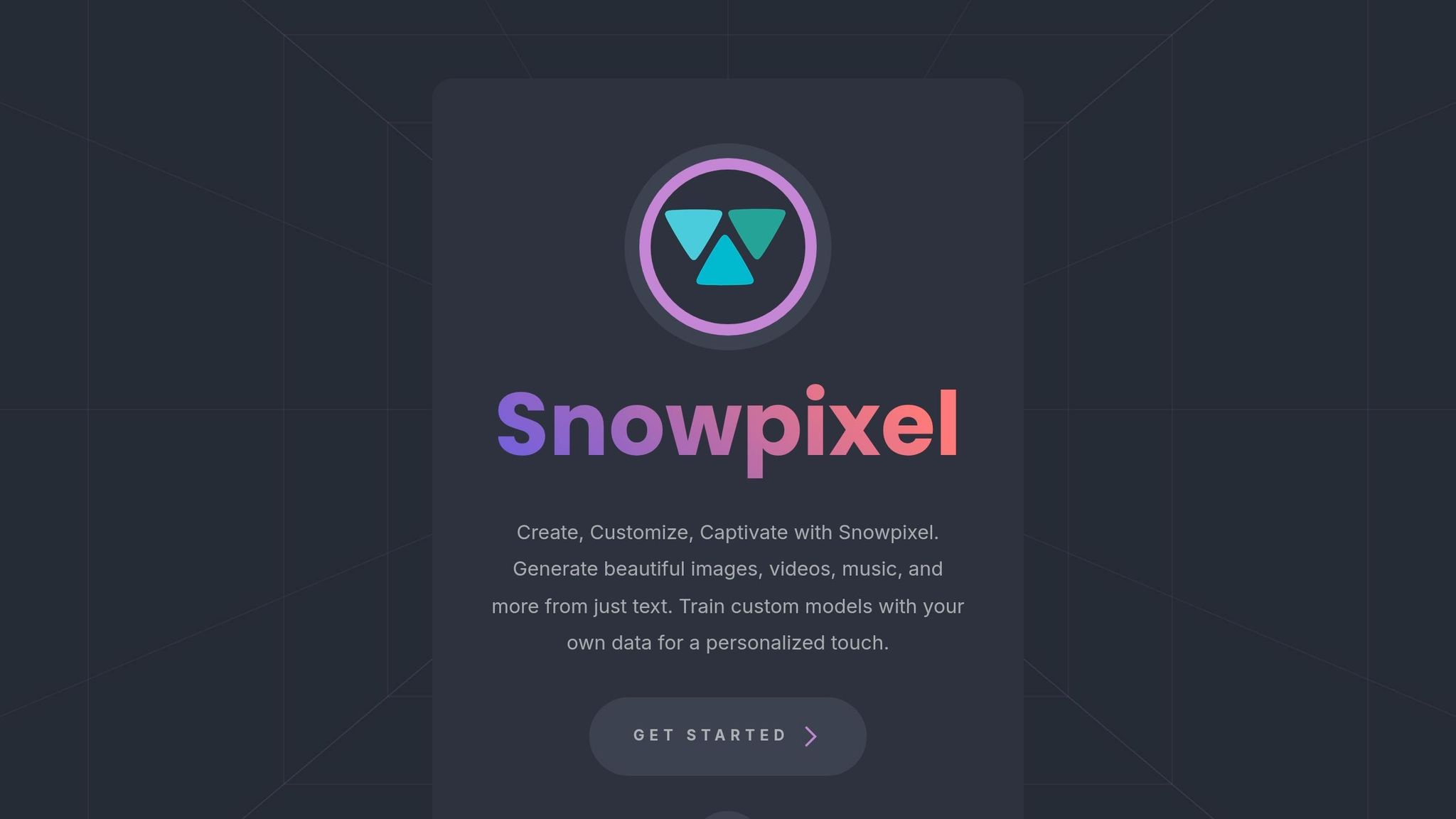
Snowpixel is a go-to platform for translating abstract ideas into visual concepts. Its "Edit and Evolve" workflow allows artists to turn text prompts into both 2D artwork and 3D models. The process is quick - image generation takes about 10 minutes per session and produces 20 images per credit. Collaborators can also upload sketches or mood boards to guide the creative output. For projects needing 3D assets, Snowpixel generates downloadable models that can be used in interactive or animated NFTs. Pricing starts at $10 for 50 credits, which includes commercial usage rights.
Artbreeder for Image Merging
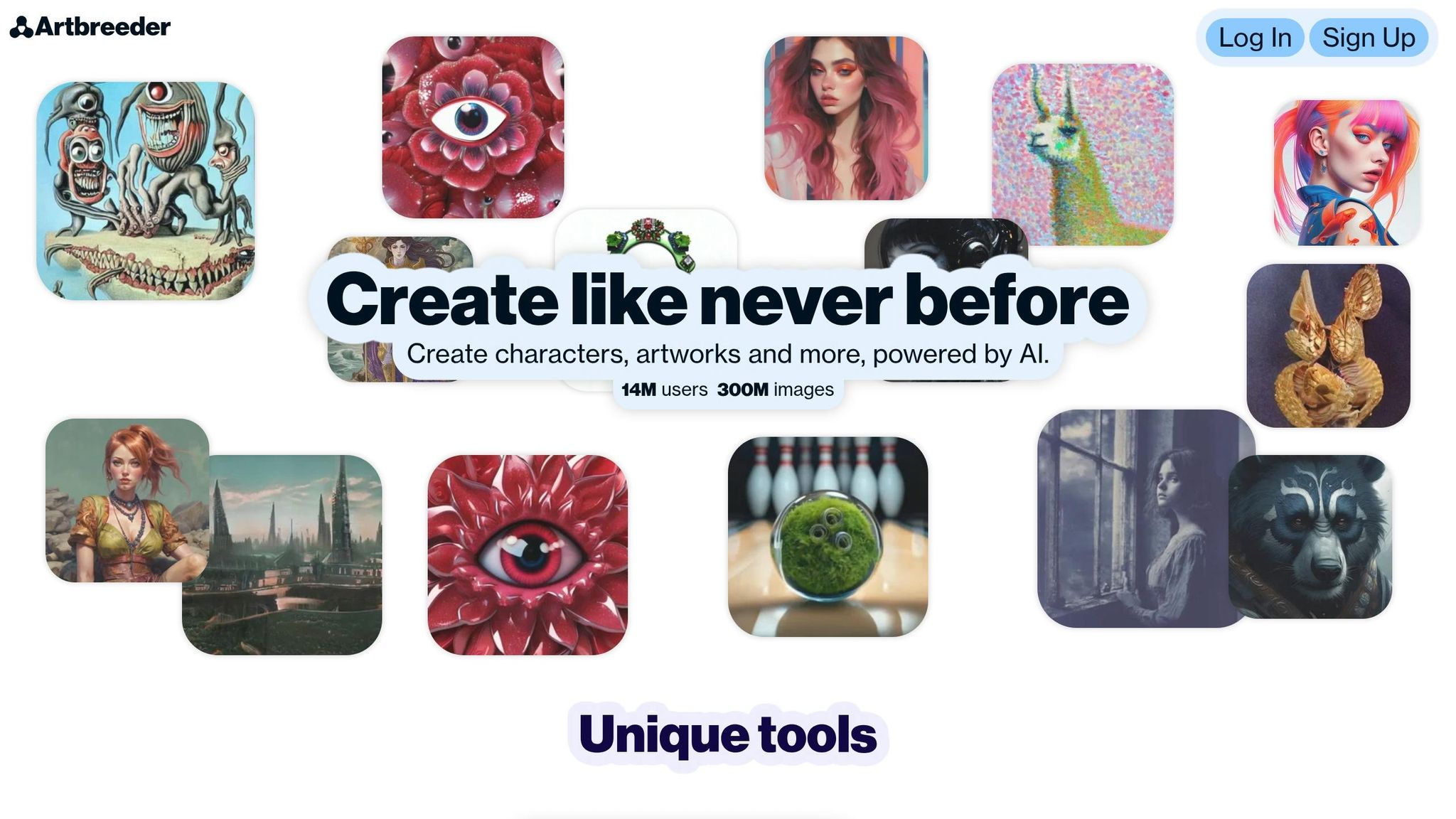
Artbreeder is all about blending and refining visuals through its unique crossbreeding system, powered by generative adversarial networks (GANs). With a user base exceeding 10 million and a library of 250 million images, it’s a hub for collaborative creativity. Teams can tweak visual elements like facial expressions, color schemes, and layouts using genetic sliders, making it perfect for NFT collections that require consistent traits across multiple pieces. Artbreeder offers a freemium model, with paid plans unlocking high-resolution downloads and private project options.
DALL·E 2 for Text-to-Image Generation
DALL·E 2 specializes in generating detailed images from textual descriptions - think prompts like "an astronaut riding a horse in a photorealistic style." This tool is perfect for quick prototyping, offering four times the resolution of its predecessor. It’s received high marks for its photorealism (88.8% approval) and ability to match captions (71.7% approval). By using DALL·E 2, teams can cut traditional brainstorming time by as much as 70%. The platform also includes safeguards to block violent or adult content and restricts photorealistic face generation to protect public figures.
AI Blog Generator Directory for Content Creation
Creating NFTs isn’t just about visuals - captivating narratives, engaging promotional content, and accurate metadata are just as important. The AI Blog Generator Directory (https://aibloggenerators.com) offers a curated list of tools for content creation, ranging from AI-driven copywriting to SEO optimization. Resources are organized into categories like "AI Writing & Content Creation" and "AI Image Generation & Editing", making it easy for teams to find tools to craft backstories, marketing materials, and other complementary content.
These platforms play a crucial role in streamlining the process of designing, refining, and minting collaborative NFT art, enabling creators to focus on innovation and storytelling.
Step-by-Step Workflow for AI-Powered NFT Collaboration
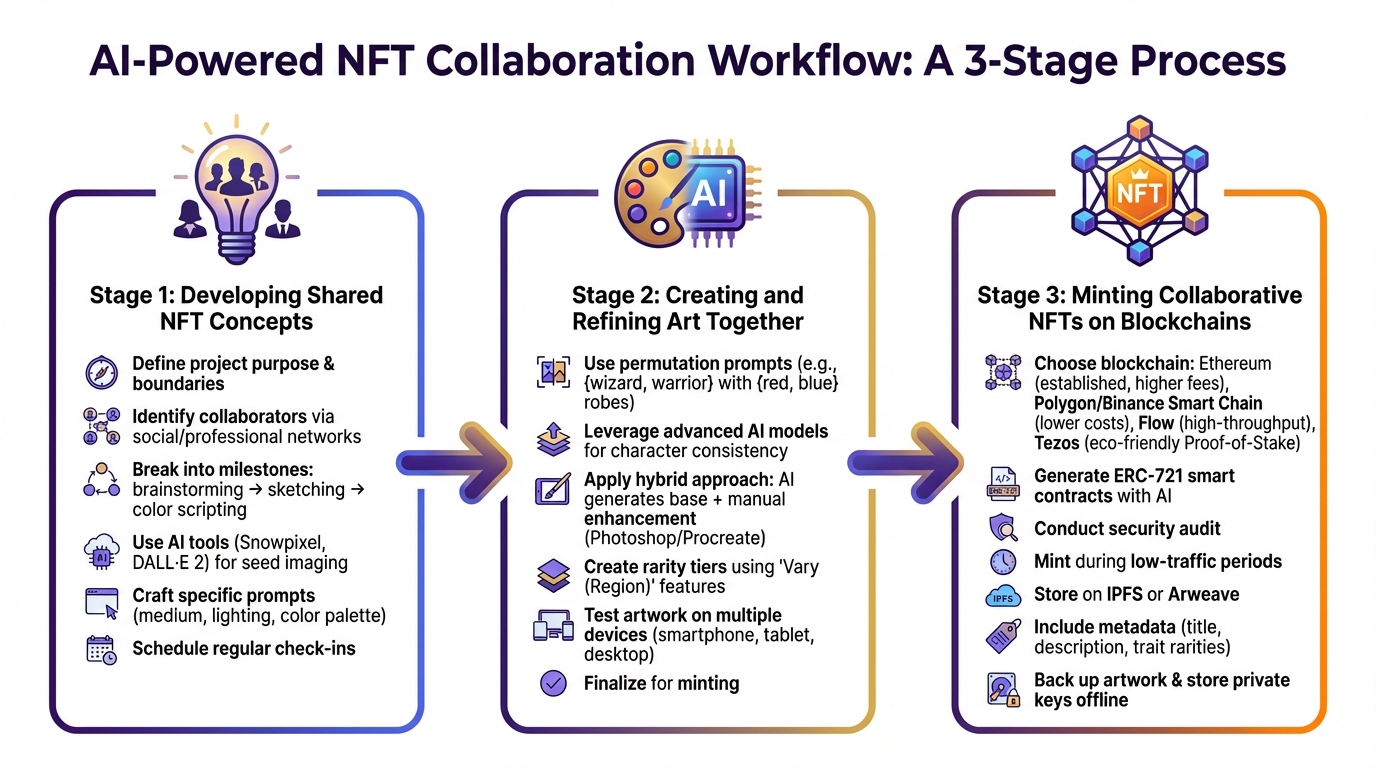
AI-Powered NFT Creation Workflow: From Concept to Minting
Developing Shared NFT Concepts
Start by clarifying your project's purpose and key boundaries. Are you creating experimental art, launching a collectible series, or working on a professional networking initiative? Define any techniques, software, or themes you want to avoid to ensure smooth collaboration. Then, identify potential collaborators through social platforms or professional networks - look for artists whose portfolios and communication styles align with your vision.
Break the concept development process into clear milestones, such as brainstorming, sketching, and color scripting. Use seed imaging as a reference point and assign roles based on each member's strengths. AI platforms like Snowpixel and DALL·E 2 can help streamline this process. When it comes to crafting prompts, use specific descriptors - like medium, lighting, and color palette - to maintain a consistent "artistic universe" throughout the project. Schedule regular check-ins, including initial meetings and feedback sessions, to ensure everyone stays on track.
Creating and Refining Art Together
Once the concept is finalized, the focus shifts to generating and refining the artwork collaboratively.
Leverage permutation prompts in tools like Midjourney to create a wide variety of images from a single template. For example, a prompt like {wizard, warrior} with {red, blue} robes can produce multiple unique combinations. Advanced AI models, such as Gemini or OpenAI's latest releases, now offer better character consistency, allowing teams to generate the same subject in different poses while maintaining identical features and styles. This reduces the time spent on manual curation and allows more focus on creative decisions.
Refinement often involves a hybrid approach: AI generates the base image, and team members enhance it using tools like Photoshop or Procreate. To create rarity tiers, use features like "Vary (Region)" in AI tools to highlight specific areas or add unique traits like laser eyes or golden crowns. Integrated NFT platforms can speed up deployment significantly. Before finalizing, test the artwork on various devices, such as smartphones and tablets, as visuals can differ greatly from desktop monitors. Once adjustments are complete, the artwork is ready for minting.
Minting Collaborative NFTs on Blockchains
After completing and testing the artwork, the next step is securely minting the NFTs on a suitable blockchain.
Choose your blockchain based on the needs of your project. Ethereum offers a well-established ecosystem but comes with higher gas fees. Alternatives like Polygon or Binance Smart Chain provide lower costs, while Flow is ideal for high-throughput needs. For eco-conscious projects, Tezos uses energy-efficient Proof-of-Stake technology. AI tools can assist in generating ERC-721 smart contracts tailored to your specifications, including total supply, mint price, and reveal functionality. However, always conduct a thorough security audit before deploying contracts to the mainnet.
To minimize gas fees, mint during low-traffic periods. Store the minted assets on decentralized platforms like IPFS or Arweave to ensure they remain secure and tamper-proof. Include essential metadata - such as title, description, and trait rarities - to help collectors understand the value of your NFTs. Finally, back up your original AI-generated artwork and securely store private keys and recovery phrases offline, as losing these could result in permanent asset loss.
Best Practices for AI Collaboration in NFT Art
Adopting these practices can enhance the balance between human creativity and AI-driven efficiency in NFT art.
Keep a detailed record of successful prompts. Build a library of prompts that align with your artistic vision. This not only ensures consistency across your NFT collection but also creates a repeatable process. Instead of vague terms like "abstract", aim for more precise descriptions such as "geometric abstraction with metallic textures and fractal patterns inspired by cellular structures". The more specific your prompts, the more distinctive the results.
In addition to documenting prompts, explore multiple AI tools to expand your creative possibilities. Successful NFT projects often combine 2–3 AI tools, each serving a different purpose - one for ideation, another for refinement, and a third for final touches. For instance, you could use DALL·E 3 for detailed concepts, Midjourney to add artistic depth, and Stable Diffusion for technical adjustments. This layered approach takes advantage of each tool's unique capabilities.
Streamline quality control with automation. Automating checks for contrast, clarity, and composition can cut review time by as much as 70–80%. As Dylan Morin highlights, "The specificity of your AI prompts directly correlates with the uniqueness of your NFT outputs". However, even with automation, human oversight remains essential to ensure the final work conveys the desired emotion and stays true to your artistic standards.
Verify commercial usage rights before minting your work. Licensing terms differ across platforms - Midjourney, for example, requires a paid subscription for commercial use, while other tools may have their own rules. Always review the terms of service for each AI platform to protect both your creative and commercial interests.
Be transparent about your AI tools and methods. Share details about your creative process and the AI tools you use in your NFT metadata and promotional materials. Collectors increasingly value the narrative behind the collaboration between human and machine, appreciating the authenticity it brings to the artwork. While integrated platforms can speed up launches by up to 70%, never compromise on transparency or quality in the pursuit of efficiency.
Conclusion
AI is reshaping NFT art by fostering a collaborative relationship where machine intelligence handles rapid generation, and artists focus on crafting meaningful narratives and intricate details. This partnership allows creators to turn their ideas into digital assets with ease, opening up new opportunities for artistic expression and efficiency.
Early adopters of NFTs have seen tangible benefits, including a 15.2% reduction in costs and a 22.6% boost in productivity, achieved through workflows that integrate tools like DALL·E 2, Artbreeder, and Stable Diffusion.
Beyond these gains, advancements in blockchain technology are unlocking fresh creative avenues. Techniques like on-chain generative minting embed scripts directly into smart contracts, ensuring the artwork's final form is determined at the moment of sale. Meanwhile, interactive NFTs that respond to market trends or real-world data represent a bold step forward, offering dynamic assets that evolve over time.
As workflows evolve, the focus of NFT value has shifted. Instead of relying solely on token scarcity, the emphasis now lies in transparency and intentional storytelling - what some experts describe as a "new economy of scarcity". Success in this space demands a careful balance: leveraging AI's scalability while maintaining human oversight, managing prompt libraries, ensuring proper usage rights, and being upfront with collectors about the tools and methods used.
Whether you're creating your first NFT or scaling a massive collection, AI offers immense creative potential but requires careful planning. By combining automation with artistic intent, creators can produce NFTs that blend innovation with storytelling, ensuring each piece - no matter the scale - stands out with both originality and purpose.
FAQs
How can I ensure character consistency across an NFT collection using AI?
To keep characters consistent in an NFT collection, you can use strategies like seed locking to maintain consistent noise patterns and prompt engineering with clear, detailed descriptions or references. More advanced options include predefining characters before generation, incorporating LoRA training, and using tools designed to ensure consistency across multiple images. These methods help maintain uniformity in key features such as faces, outfits, and overall appearance throughout your collection.
What AI outputs can I legally mint and sell as NFTs?
The legality of creating and selling AI-generated NFTs hinges on two key factors: human involvement and the licensing terms of the AI tool. For a work to qualify for copyright protection, it must include substantial human creative input. Purely AI-generated works generally don't meet the criteria for copyright eligibility.
It's crucial to review the licensing terms of the AI tool you’re using. Ensure that your contributions align with ownership requirements and comply with any licensing conditions. Some platforms may impose restrictions on commercial use or even retain certain rights over the work. Always double-check these terms before proceeding.
Which blockchain is best for minting AI-generated NFT art on a budget?
If you're looking to mint AI-generated NFT art without breaking the bank, Solana is an excellent option. Known for its low transaction fees and fast processing speeds, Solana allows creators to mint NFTs efficiently and affordably. Most transactions cost less than a penny, making it a practical choice for budget-conscious artists.