AI summarizers can save you time by condensing content like articles, meeting notes, or research papers into shorter, digestible formats. But to get the most out of these tools, you need to use them correctly. Here’s what you need to know:
- Types of Summarization: Extractive summarizers pull key sentences directly, while abstractive ones create new phrasing. Choose based on your needs - accuracy for technical documents vs. natural flow for blogs.
- Tool Selection: Match tools to your content type. For example, Scholarcy ($8.99/month) is great for academic work, while Jasper ($49/month) works well for marketing.
- Crafting Prompts: Clear instructions improve results. Be specific about the audience, tone, format, and focus. For instance, "Summarize this for a CEO in 3 bullet points."
- Accuracy Check: AI outputs can contain errors or biases. Use the FACT checklist (Fidelity, Actionability, Context, Transparency) to verify reliability.
- Workflow Integration: Automate repetitive tasks and use summarizers for SEO content structure by optimizing for AI readability.
- Ethical Use: Cite sources, avoid plagiarism, and ensure transparency by labeling machine-generated summaries.
AI summarizers are powerful tools, but they require human oversight to ensure accuracy and ethical use. The right mix of clear prompts, careful verification, and strategic integration can help you create better, faster summaries.
The BEST Way to Summarize Anything With GPT-4o
sbb-itb-a759a2a
Selecting an AI Summarizer

AI Summarizer Tools Comparison: Features, Pricing, and Accuracy Ratings
When choosing an AI summarizer, it's essential to match the tool to your primary content needs. For instance, academic researchers might lean toward Scholarcy ($8.99/month, rated 4.2/5) for its ability to extract methodologies and citations. On the other hand, marketing teams often prefer tools like Jasper ($49/month), which can maintain a brand's tone while generating actionable insights.
Identify Your Content Requirements
Start by determining whether you need extractive or abstractive summarization. Extractive tools are designed to pull exact sentences from the source material, making them ideal for technical papers or legal documents where precision is key. Abstractive tools, however, create new phrasing that flows more naturally, making them better suited for blog posts or social media content.
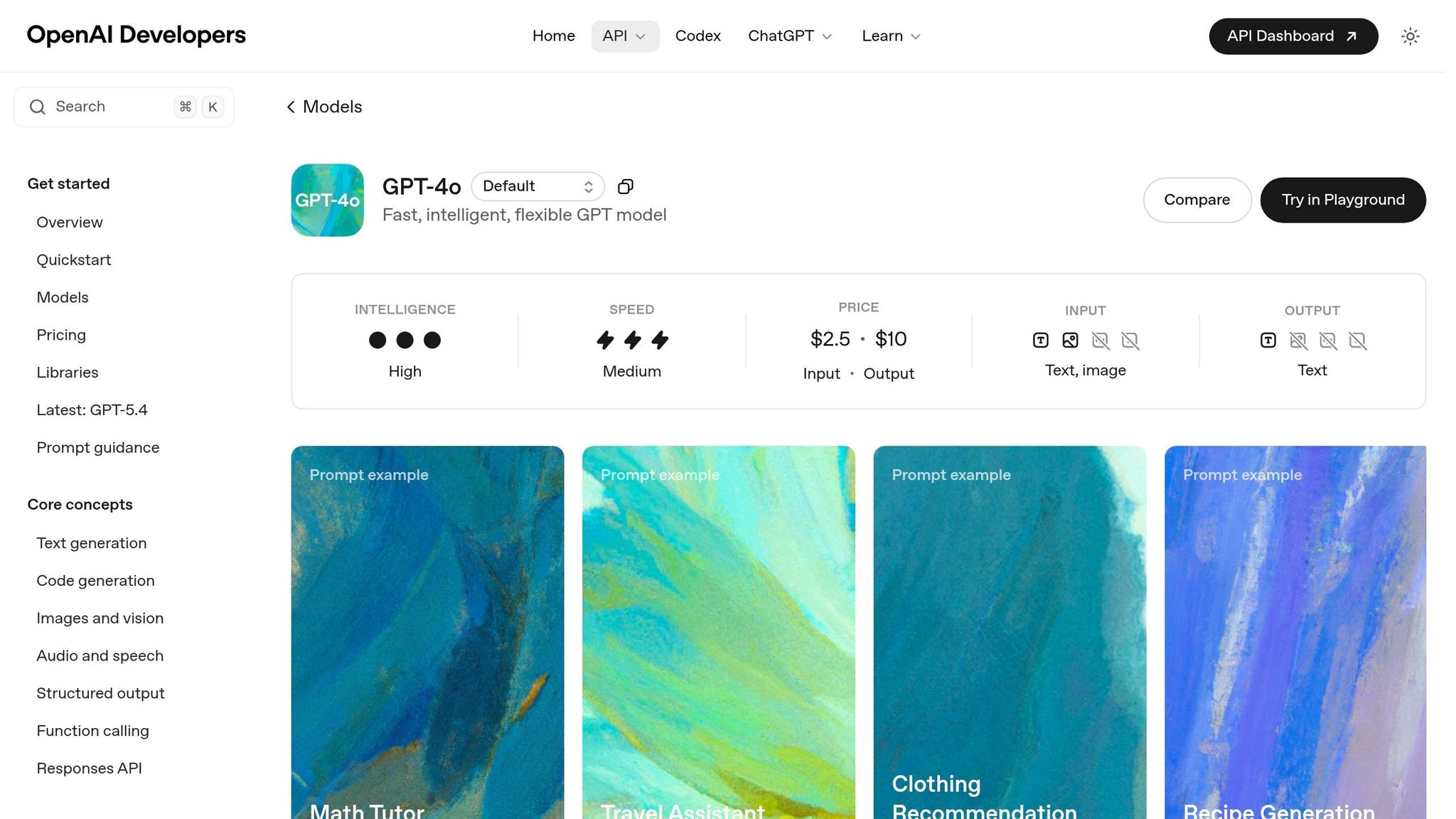
Some tools, like DigestAI (free tier; Pro at $20/month), allow flexibility by offering model options such as GPT-4o for speed, Claude 3.5 for more complex reasoning, or Gemini 1.5 Pro for handling long-form content. Depending on the model and content type, accuracy can vary significantly, ranging from 68% to 95%.
Review Features and Customization
Look for tools that integrate smoothly into your workflow. Features like adjustable summary lengths (based on word count, percentage, or short/medium/long options) and flexible formats (bullet points, paragraphs, or even mind maps) can be particularly useful. Tools offering browser extensions, API access, or direct integration with platforms like Notion, Slack, or Google Drive can save time by reducing the need for manual copy-pasting.
Some advanced options now include plagiarism detection, AI-content detection, and built-in citation generators, ensuring your summaries are polished and ready for publication.
Test with Sample Content
Before committing to a tool, run tests using the FACT checklist (Fidelity, Actionability, Context, Transparency). Experiment with different types of content - like technical white papers, meeting transcripts, or YouTube videos - and verify that the tool accurately captures statistics and quotes from the source material.
For example, NoteGPT, a favorite among students with a 4.4/5 rating, excels at creating timestamped video summaries and exporting flashcards. However, its accuracy score (82/100) falls short compared to DigestAI's 94/100. Testing tools with your specific content ensures you select the best fit and sets the stage for crafting effective prompts to optimize your summaries.
Writing Clear Prompts
When using AI summarizers, the clarity of your prompts is what determines the quality of the output. In fact, research shows that nearly half of the performance improvements in advanced AI writing tools come from users refining their prompts rather than the model itself. Even small adjustments can make a big difference - fixing multiple prompt mistakes can improve results by as much as 5.85x.
Provide Specific Instructions
A good prompt answers who, what, why, and how. Start by defining your intent clearly with action verbs like "summarize" or "analyze". Specify your target audience - whether it’s a middle school student, a corporate executive, or a technical professional. This ensures the AI adjusts its tone and vocabulary accordingly.
Next, outline the format and structure you need. Do you prefer bullet points, a concise paragraph, a numbered list, or maybe a comparison table?. Add scope and constraints by setting word or character limits, or by specifying sections to include or exclude. Don’t forget to mention the tone and style - whether you need it to be formal, conversational, academic, or persuasive.
For example, instead of saying, "Summarize this meeting transcript", try:
"Act as a business analyst. Summarize this sales meeting transcript in 3 bullet points for our CEO. Focus on revenue projections and client concerns. Use a professional tone. Avoid technical jargon. Maximum 100 words."
This approach can cut down manual editing time by 75%.
You can also use delimiters like triple quotes (""") or hashtags (###) to clearly separate your instructions from the text you want summarized. Place the most critical instructions at the start of your prompt - OpenAI recommends this for better results.
Once you’ve drafted your initial prompt, refine it through testing and adjustments to achieve the best clarity and precision.
Refine Your Prompts
Prompt writing often requires trial and error. Experiment with phrasing, instructions, and parameters to refine your results. Fixing even one error in your prompt can improve the output by 20-30%.
For better focus and reasoning, consider using few-shot prompting or chain-of-thought prompting. With few-shot prompting, provide 2-3 examples of the type of summary you want. This helps the AI align with your desired tone, structure, and focus. Meanwhile, chain-of-thought prompting encourages the AI to break down its reasoning step-by-step or identify key themes before generating a summary. This method can improve results by up to 40% for complex tasks.
If the AI’s summary is too broad, try sequential prompting. Start by asking for key themes, then use those themes to guide a more focused summary. Another option is self-critical prompting, where you ask the AI to critique its own work. This can uncover gaps or weaknesses, leading to a more polished final version.
Lastly, include negative constraints by specifying what the AI should avoid, such as "Do not use corporate jargon" or "Avoid marketing language". Well-crafted prompts can reduce the need for follow-up queries by about 20%.
"The quality of AI responses - or output - is directly proportional to your ability to write effective prompts".
Reviewing AI-Generated Summaries
Top AI tools for writing and blogging can speed up content creation, but human oversight is crucial for maintaining accuracy. Studies show that AI-generated summaries can contain factual errors in up to 31.2% of cases. This makes it essential to approach AI outputs as high-risk drafts that need thorough verification, rather than simply accepting them at face value.
Verify Accuracy
Start by checking if the summary accurately reflects the key points of the original content. Use the FACT Checklist - which evaluates Fidelity, Actionability, Context, and Transparency - to assess its reliability. Confirm all claims, statistics, dates, names, and quotes against the original source. Be on the lookout for hallucinations, which are details invented by the AI with no basis in the source material. Tools like Google Fact Check Explorer or Claimbuster can help cross-check facts.
"Generative models are excellent at pattern-matching language but indifferent to truth unless you deliberately design controls around them." - Single Grain
Once you've ensured the summary is accurate, focus on making it clearer and easier to read.
Improve Readability
Reading summaries aloud can help you identify awkward phrasing or unnatural flow. Use a mix of short and long sentences in the active voice to keep the writing engaging. Aim for an 8th-grade readability level, as this ensures accessibility for a wide audience. In fact, searches for "easy-to-read articles" have risen by 40% year-over-year as of late 2025. Break up long sections into smaller paragraphs, add clear headings, and replace jargon with simpler terms. If technical terms are necessary, define them the first time they appear.
Compare Results from Different Tools
After refining readability, compare outputs from multiple AI summarizers. This step helps identify inconsistencies or hallucinations that one tool might miss. For complex documents, you can even break them into sections and summarize each part separately using different tools before combining the results into a cohesive overview. This method ensures the final summary stays true to the original content.
Accuracy is especially important because 26% of search results featuring AI summaries now result in no user clicks, making the summary a critical first impression for your brand.
Adding AI Summarizers to Your Workflow
Once you've ensured your summaries are accurate and easy to read, it's time to incorporate AI summarization tools into your workflow. By automating what used to be manual tasks, you can save time and energy. Did you know employees spend about 30% of their day just searching for information? AI summarizers can help cut down that time significantly, boosting efficiency across various content-related tasks.
Automate Repetitive Tasks
One of the best ways to improve productivity is by automating repetitive tasks. Instead of manually summarizing research articles, meeting notes, or email chains, you can set up workflows that handle this for you. For example, you could automate the process of gathering industry-specific articles, summarizing them using an AI tool, and then sharing the summaries directly to platforms like Slack or Notion. This type of automation saves the 8–12 minutes typically spent on manually condensing each article.
For more complex documents, break them into smaller sections to ensure the summaries remain precise - this is especially useful for technical or legal content where every detail matters. AI tools particularly shine in reading-heavy workflows, streamlining tasks that would otherwise be time-consuming.
Use Tools for SEO
AI summarizers can also play a role in improving your content's visibility in search results. With over 30% of search results now featuring AI-generated summaries, it's essential to make your content easy for AI systems to understand. Using structured data, like Article, HowTo, or FAQPage schema markup, can guide these systems in pulling the right information. Adding a "Key Takeaways" or summary block near the top of your content can also help AI prioritize essential details.
"The AI-generated summary of your page is rapidly becoming the first (and often the only) impression a user receives, making it a critical inflection point for content strategy." - Eric Siu, Founder, Single Grain
Formats like bullet points and numbered lists work well because they simplify the content, making it easier for AI models to extract key ideas without getting bogged down in lengthy paragraphs. Pairing these strategies with automated workflows ensures your content is both efficient to produce and optimized for discovery. If you're looking for specialized tools, the AI Blog Generator Directory (https://aibloggenerators.com) offers a selection of AI writing tools with features like automated keyword research and CMS integration.
Stay Updated on Tool Updates
Even after you've optimized your workflows, it's important to keep an eye on updates to your AI tools. These technologies evolve quickly, and changes to models can affect how they summarize or interpret your content. AI-generated summaries are becoming more dynamic, often shifting based on updates to models or changes in user query intent. To stay ahead, review and refresh your summaries every 6–12 months to adapt to major updates or new capabilities. Also, regularly check how your content appears in AI-generated search results, adjusting formatting or summaries as needed to maintain accurate and effective messaging.
Following Ethical and Legal Guidelines
When using AI summarizers, it's crucial to stick to legal and ethical standards to ensure both credibility and accuracy. Using AI blog generators responsibly is essential to avoid issues like copyright infringement, unintentional bias, or ethical missteps. Summaries should never completely replace the original content when deeper analysis is required. Replacing the original source entirely with a summary could violate copyright laws. Additionally, always confirm you have the right to summarize content from paywalled or proprietary sources, as many platforms explicitly prohibit automated copying in their Terms of Service.
Cite Original Sources
Proper attribution is a cornerstone of ethical use. Instructing AI to include citations (e.g., "Add 3–5 sources with URLs") is a good start, but it's essential to manually verify every citation. Keep a detailed log that includes the author, title, access date, and prompt details to ensure everything checks out. AI models are known to sometimes "hallucinate" citations, creating fake author names, publication dates, or even entire articles.
Citation styles vary, and AI tools may not always follow the latest standards. For instance, some tools might use the outdated "doi:" prefix in APA citations instead of providing the full URL (e.g., https://doi.org/10.xxxx). As Human Writes AI emphasizes:
"Speed is only valuable when paired with accuracy and integrity, and effective citation practices demand a balance between the convenience of AI and the diligence of human review".
Labeling AI-generated summaries as "machine-generated" is another important step to maintain transparency with your audience. If the AI directly quotes text from a source, ensure the material is enclosed in quotation marks and properly cited to avoid plagiarism.
Check for Bias and Errors
AI summarizers can reflect biases present in their training data and may also produce factual inaccuracies. For instance, research from Dialpad revealed a 12% gender bias in meeting summaries before they improved their training datasets. With over 30% of search results now including AI-generated summaries, and about 26% of these results receiving no clicks, users often rely solely on these summaries - making accuracy even more critical.
To evaluate both ethical integrity and accuracy, the FACT Checklist can be a helpful tool. It involves assessing:
- Fidelity: Does the summary accurately reflect the source's intent?
- Actionability: Is the information useful for decision-making?
- Context: Are industry-specific terms and nuances preserved?
- Transparency: Does the summary acknowledge any uncertainties?
Set up a verification process by skimming the original document for main ideas, comparing them with the AI-generated summary, checking for contradictions, and manually confirming key statistics and quotes. Maintaining a "source of truth" document with consistent product names, metrics, and definitions can also help prevent inaccuracies caused by the AI blending multiple versions of the same fact.
Human oversight is non-negotiable, especially for critical content. Editors should review and refine AI-generated summaries before they are published. Testing your summarizer with diverse datasets that reflect various users, regions, and scenarios can help identify weaknesses. Adversarial testing - where trusted reviewers deliberately try to expose biases or trigger errors - can further ensure the reliability of your AI tool. These steps, combined with earlier practices, help ensure summaries are not only effective but also ethically responsible.
Conclusion
Using AI summarizers effectively means finding the right balance between speed and responsibility. It starts with choosing the right summarization method: extractive works best for precise, high-stakes documents like legal contracts, while abstractive shines when creating natural, conversational summaries for content like blog posts or reports. From there, prompt engineering becomes key. By giving clear, role-specific instructions - like "Summarize this medical study for a pharmaceutical executive" - you can significantly improve the quality of AI outputs.
But even the best AI tools need human oversight. While 73% of employees say AI tools make them more productive, that productivity only matters when paired with careful verification. This is where the FACT Checklist comes in. It’s a systematic way to catch common issues like hallucinations or factual inaccuracies, especially in abstractive summaries.
Ethical responsibility ties everything together. Always label machine-generated summaries, double-check citations, verify statistics, and stay aware of potential biases in AI models. As digital marketer Noor Fatima aptly puts it:
"The quality of an AI-generated summary depends more on how you ask than on the tool".
FAQs
When should I use extractive vs. abstractive summarization?
Use extractive summarization when you need to maintain precise wording and factual accuracy. This approach is perfect for tasks like summarizing legal documents or compiling news, as it selects key sentences directly from the original text.
On the other hand, abstractive summarization works well for creating summaries that feel more natural and conversational. It's ideal for content marketing or breaking down complex concepts, as it rewrites the main ideas in fresh, cohesive sentences that are easier to read and engage with.
How do I write a prompt that gets the summary I want?
To craft a prompt that gets the results you want, make it specific, clear, and detailed. Spell out exactly what you're looking for - this includes instructions, preferred format, length, tone, and any relevant context. Examples can also help guide the response.
For instance, instead of saying, "Summarize this article," you could say: "Summarize the main arguments in bullet points, keeping it under 150 words and focusing on key findings." This approach helps ensure the output matches your expectations.
How can I quickly verify an AI summary is accurate and unbiased?
To ensure an AI-generated summary is accurate, start by comparing the key facts and data with trustworthy sources or the original material. Make sure the summary reflects the main message without distorting or misrepresenting it. Pay attention to any biased language or omitted information that could alter the meaning. Taking this step-by-step approach ensures the summary stays accurate and impartial, reducing the need for extensive manual checks.